Mesmerizing Facts About The Moon
December 17, 2025Have you ever noticed how beautiful the Moon looks at night? The Moon’s beauty is the stuff of legend, central to many ancient traditions and religions.
In modern science, though, we’re more interested in unraveling what the Moon is made of and how it interacts with our home planet.
While we may know more about the Moon than anything else in space, there’s still so much to discover. The world’s space agencies continue to study the Moon, sharing new findings often.
Each year on July 20, we celebrate the Moon with International Moon Day.
If you’re eager to learn some incredible lunar facts, keep reading.
The Moon shines brighter than any other object in the night sky. However, it doesn’t produce any light but reflects the Sun‘s rays.
How much of the Moon we get to see at night depends on its position in orbit. This is split into eight phases: new, waxing crescent, first quarter, waxing gibbous, full, waning gibbous, last quarter, and waning crescent.
We all see the same moon phase, irrespective of our locations on Earth.
Unlike other planetary neighbors, Earth has just one natural satellite, the Moon.
Our solar system has over 200 moons, but ours is the fifth largest.
The Moon is about one-quarter the Earth’s size.
The Moon, according to scientists, is about 4.5 billion years old. It’s believed to have been formed from debris flung into space when the Earth collided with another planetary structure, Theia.
The Moon completes its trip around the Earth in 27.3 days. But it needs 29.5 days to go through its phases.
The Earth and Moon are tidally locked, with their rotations in sync. This means that even though the Moon rotates, we can only see one side.
The Moon performs special wobbly movements as it rotates, called librations, allowing us to catch a glimpse of the dark side.
As far back as 20-30,000 years ago, humans recorded the Moon’s phases by carving lines into sticks and bones called “tally sticks.”
From here, especially when it’s full, the Moon looks like a perfect sphere. In reality, it’s closer to the shape of an egg, with the broader end facing the Earth.
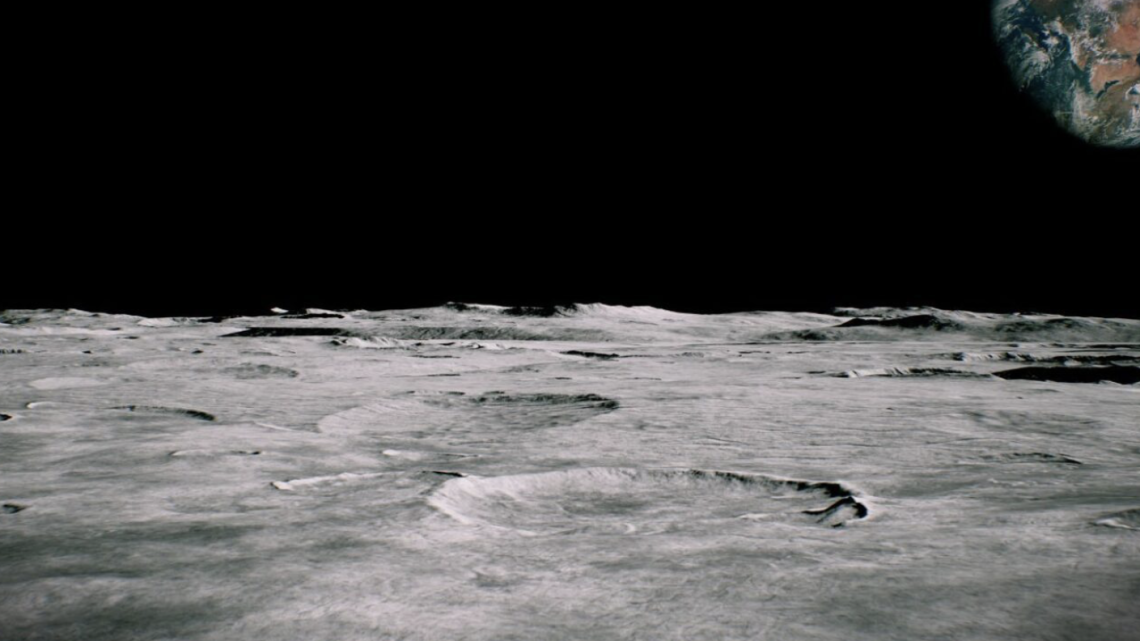
The Moon’s landscape features craters and holes where asteroids, comets, and meteoroids have struck it.
At about 18,000 feet (5486 meters), Mons Huygens is the tallest mountain on the Moon but not its highest summit.
The actual highest point on the Moon is the Selenean summit, which is 35,387 feet (10,785 m) tall. If placed side by side, it would tower 20% higher than Earth’s tallest point, Mount Everest.
The Moon has a scanty atmosphere of 100 molecules per cubic centimeter. This is far thinner than the Earth, which has about 100 billion billion molecules per cubic centimeter.
If you leave your footprint on the Moon’s surface, it could sit there for centuries. This happens because there are no winds or weather conditions to alter it.
Temperatures vary significantly on the Moon, hitting up to 273 degrees Fahrenheit (134 degrees Celsius) during the day. On the night side, temperatures can plummet to -243 degrees Fahrenheit (-153 degrees Celsius).
It’s theorized that the Moon had a thicker atmosphere long ago, but this was lost into space when lunar volcanic activity stopped.
The ancient Moon’s atmosphere likely contained carbon monoxide, sulfur, and water.
Water still exists on the Moon, but primarily as ice. It’s more abundant around the poles, where sunlight is scarce.
The Moon is about 238,855 miles (384,400 kilometers) from Earth. That’s enough room to fit about 30 Earths.
Perigee is where the Moon is closest to the Earth at 225,700 miles (363,300 km). The Moon appears much larger at this distance and is called a supermoon.
On the other hand, the Moon is farthest from the Earth at Apogee, which is 252,000 miles (405,500 km) away. At this distance, it appears smaller and is called a micromoon.
A supermoon appears 14% bigger and 30% brighter than a micromoon.
The distance between the Moon and Earth is increasing slowly at 1.5 inches (3.81 centimeters) annually as the Moon drifts off.
Although the Moon typically appears gray, dust particles in the air can make it appear blue.
An actual blue moon doesn’t have a blue color. These days, a blue moon typically means the second full moon in a calendar month.
If the Moon were to slam into the Earth, the gravitational forces here would tear it apart before impact. However, the burning lunar debris raining down would raise the temperatures on Earth so high that it could wipe out all life.
The Moon helps regulate the Earth’s climate.
On the Moon, you only experience one-sixth of the gravity felt on Earth, so you’ll feel a lot lighter.
The Moon controls the ocean’s tides by the force of its gravity on our planet.
There are quakes on the Moon caused by tidal forces. These moonquakes don’t occur as frequently or as powerful as earthquakes but may last up to an hour.The Moon’s gravitational pull on Earth is slowing our planet’s rotation, and this phenomenon is called tidal braking. This extends our days by 2.3 milliseconds per century.
Billions of years ago, the days on Earth were less than 10 hours long. The Moon’s gravitational pull on our planet slowed its spin over time, making the days longer.
The Moon is the only place humans have visited outside our home planet.
Humans first saw the other side of the Moon in 1959 when a Soviet spacecraft flew over.
In 1959, Luna 2 became the first object successfully sent from Earth to the Moon.
On July 21, 1969, Neil Armstrong, Commander of the United States Apollo 11 mission, became the first person to walk on the Moon.
About 500 million people watched the live broadcast of this first human-crewed mission to the Moon.
Although the original images from the first moon landing show the American flag waving, there were no winds. The astronauts actually caused the ripples on the flag themselves when they set the flag up improperly.
The Apollo missions to the Moon returned with 842 pounds (382 kilograms) of lunar sand and rocks.
Through the years, over 100 robotic spacecraft have been sent to the Moon. NASA presently has three spacecraft touring the Moon: the Artemis Twins and the Lunar Reconnaissance Orbiter spacecraft.
Humans have not revisited the Moon since the Apollo 17 mission of December 1972.